
Frank Sinatra Thats Life 1966 Jazz Flac 1 Fix -
State of the art timing analysis
with industry-hardened methods and tools.
State of the art timing analysis
with industry-hardened methods and tools.
...with industry-hardened methods and tools. T1 empowers and enables. T1 is the most frequently deployed timing tool in the automotive industry , being used for many years in hundreds of mass-production projects.
As a worldwide premiere, the ISO 26262 ASIL‑D certified T1-TARGET-SW allows safe instrumentation based timing analysis and timing supervision. In the car. In mass-production.
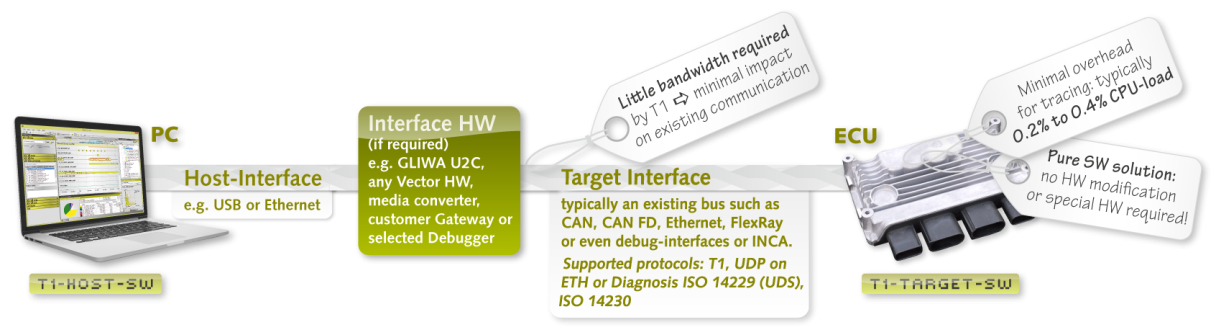
T1.timing comes with two extension options. Add-on product T1.streaming provides the possibility to stream trace data continuously — over seconds, minutes, hours or even days. Add-on product T1.posix supports POSIX operating systems such as Linux or QNX.
T1.timing comes with a modular concept and several plug-ins which are described in the following. Plug-ins can be easily enabled or disabled at compile-time using dedicated compiler switches such as T1_DISABLE_T1_CONT. To disable T1 altogether, it is sufficient to disable compiler switch T1_ENABLE which leaves the system in a state as of before the T1 integration.
To help you optimize your vintage audio library, let me know:
"That’s Life" was different. It wasn't a ballad; it was gritty. It was R&B-infused pop with a heavy jazz swing. Sinatra famously disliked the song initially, but he understood its power. He delivered the vocal with a rougher edge, leaning into the lyrics about riding high in April and getting shot down in May.
The keyword specifies "jazz," which is a crucial classification. While Sinatra is often categorized as a traditional pop vocalist, the album occupies a unique space. Music databases and collectors categorize the album under Jazz , with sub-styles like "Vocal Jazz," "Easy Listening," and "Swing".
The "fix," then, is the digital alchemy that attempts to perfect the transfer of that analog warmth. It might involve removing clicks and pops, correcting the channel balance, or ensuring the metadata (song titles, album art, artist name) is perfectly accurate. The "1 fix" is a small victory in the ongoing battle to preserve musical history in the digital age.
This area often causes the harshness in the backing singers and string arrangements.
Ensure that the tags are using the standard ID3v2.3 (for ID3) or standard Vorbis Comments for FLAC.
For the jazz collector, it represents a perfect storm: an iconic vocalist, a desperate era, a swinging big band, and a digital correction that finally does justice to the analog source. That’s life—and that’s the only version worth hearing.
The powerful horn sections and Sinatra’s explosive "t" and "s" sounds on "That's Life" frequently caused digital clipping or harsh distortion on poorly optimized transfers.
: Producer Jimmy Bowen felt the track needed more "bite" and a stronger rhythm section. Despite the tension in the room—and Sinatra's impatience to leave for a dinner date—Bowen insisted on a second take. The Defiant Finish
For POSIX-based projects, see T1.posix.
To help you optimize your vintage audio library, let me know:
"That’s Life" was different. It wasn't a ballad; it was gritty. It was R&B-infused pop with a heavy jazz swing. Sinatra famously disliked the song initially, but he understood its power. He delivered the vocal with a rougher edge, leaning into the lyrics about riding high in April and getting shot down in May.
The keyword specifies "jazz," which is a crucial classification. While Sinatra is often categorized as a traditional pop vocalist, the album occupies a unique space. Music databases and collectors categorize the album under Jazz , with sub-styles like "Vocal Jazz," "Easy Listening," and "Swing".
The "fix," then, is the digital alchemy that attempts to perfect the transfer of that analog warmth. It might involve removing clicks and pops, correcting the channel balance, or ensuring the metadata (song titles, album art, artist name) is perfectly accurate. The "1 fix" is a small victory in the ongoing battle to preserve musical history in the digital age.
This area often causes the harshness in the backing singers and string arrangements.
Ensure that the tags are using the standard ID3v2.3 (for ID3) or standard Vorbis Comments for FLAC.
For the jazz collector, it represents a perfect storm: an iconic vocalist, a desperate era, a swinging big band, and a digital correction that finally does justice to the analog source. That’s life—and that’s the only version worth hearing.
The powerful horn sections and Sinatra’s explosive "t" and "s" sounds on "That's Life" frequently caused digital clipping or harsh distortion on poorly optimized transfers.
: Producer Jimmy Bowen felt the track needed more "bite" and a stronger rhythm section. Despite the tension in the room—and Sinatra's impatience to leave for a dinner date—Bowen insisted on a second take. The Defiant Finish
| Vendor | Operating System |
|---|---|
| Customer | Any in-house OS** |
| Customer | No OS - scheduling loop plus interrupts** |
| Elektrobit | EB tresos AutoCore OS |
| Elektrobit | EB tresos Safety OS |
| ETAS | RTA-OS |
| GLIWA | gliwOS |
| HighTec | PXROS-HR |
| Hyundai AutoEver | Mobilgene |
| KPIT Cummins | KPIT** |
| Siemens | Capital VSTAR OS |
| Micriμm | μC/OS-II** |
| Vector | MICROSAR-OS |
| Amazon Web Services | FreeRTOS** |
| WITTENSTEIN high integrity systems | SafeRTOS** |
| Qorix | Qorix Classic |
| Embedded Office | Flexible Safety RTOS |
(**) T1 OS adaptation package T1-ADAPT-OS required.
| Target Interface | Comment |
|---|---|
| CAN | Low bandwidth requirement: typically one CAN message every 1 to 10ms. The bandwidth consumed by T1 is scalable and strictly deterministic. |
| CAN FD | Low bandwidth requirement: typically one CAN message every 1 to 10ms. The bandwidth consumed by T1 is scalable and strictly deterministic. |
| Diagnostic Interface | The diagnostic interface supports ISO14229 (UDS) as well as ISO14230, both via CAN with transportation protocol ISO15765-2 (addressing modes 'normal' and 'extended'). The T1-HOST-SW connects to the Diagnostic Interface using CAN. |
| Ethernet (IP:TCP, UDP) | TCP and UDP can be used, IP-address and port can be configured. |
| FlexRay | FlexRay is supported via the diagnostic interface and a CAN bridge. |
| Serial Line | Serial communication (e.g. RS232) is often used if no other communication interfaces are present. On the PC side, an USB-to-serial adapter is necessary. |
| JTAG/DAP | Interfaces exist to well-known debug environments such as Lauterbach TRACE32, iSYSTEM winIDEA and PLS UDE. The T1 JTAG interface requires an external debugger to be connected and, for data transfer, the target is halted. TriCore processors use DAP instead of JTAG. |
