Downloads

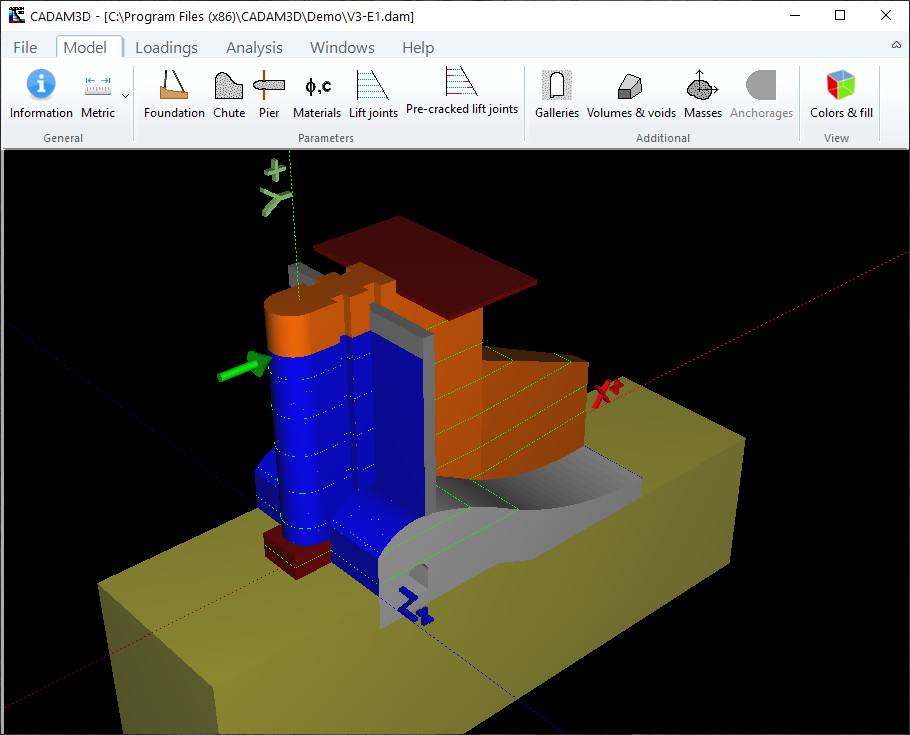
CADAM3D is a user-friendly software based on the gravity method originally developed for one of the world biggest concrete dam owner, Hydro-Quebec, and for Dams and Hydrology of the Quebec Ministry of Environment (Quebec's legislator for dam safety). CADAM3D is fully functional and is intensively used by Hydro-Quebec since 2005. To our knowledge, no other software similar to CADAM3D is available at this time.
If you perform stability analyzes of concrete hydraulic structures, this software will allow you to perform them much faster and more efficiently. If you are interested in this type of software and would like to try CADAM3D for free, please click on the button "Contact us for a free trial of CADAM3D" to send us a message.
在固件升级界面选择本地已下载的新固件文件(必须确认文件名后缀为 .bin )。上传后系统会自动验证文件完整性。
In the upgrade section, use the Browse or Choose File button to select the new firmware file on your computer.
The GM220S is a popular OEM ONT (Optical Network Terminal) used by various Internet Service Providers (ISPs), particularly in regions utilizing GPON fiber networks. Since this is often an ISP-provided device, "firmware" discussions usually revolve around updates pushed by the provider, bridge mode configurations, or unlocking the device for personal use. firmware gm220s top
While the hardware supports 802.1Q VLANs, the ISP firmware usually locks them. You cannot route specific SSIDs to specific VLANs (no IoT isolation without a managed switch).
For users who are new to firmware updates, here is a more detailed, step-by-step guide: While the hardware supports 802
Running the correct, top-tier firmware version ensures that your fiber connection maintains optimal throughput. It also unlocks multi-language interfaces (like English firmware overrides), resolves spontaneous reboots, and protects against security vulnerabilities. Hardware Architecture
: 2.4GHz Wi-Fi (802.11n) typically supporting up to 300Mbps. resolves spontaneous reboots
While powerful, this carries a very high risk of permanently bricking your device if not done correctly.
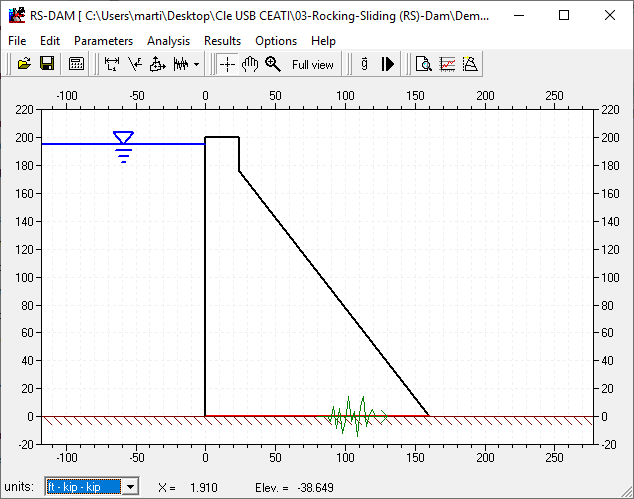
RS-DAM is a computer program that was primarily designed to provide a computational tool to evaluate the transient response of a completely cracked concrete dam section subjected to seismic loads. RS-DAM is also used to support research and development on structural behavior and safety of concrete dams.
RS-DAM is based on rigid body dynamic equilibrium. It performs a transient rocking and/or sliding analysis of a cracked dam section subjected to either base accelerations or time varying forces. Several modelling options have been included to allow users to explore the influence of parameters (e.g. geometry, additional masses, variation of the uplift force upon rotation, hydrodynamic pressures in translation (Westergaard) and rotation, center of rotation moving with sliding, coefficient of restitution of impact, etc...). RS-DAM is developed in a university context and has no commercial aspect.
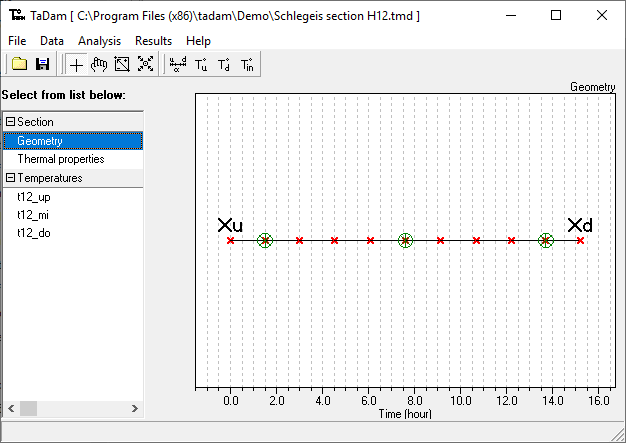
TADAM (Thermal Analysis of concrete DAMs) software employs a new frequency-domain solution technique to solve the 1D thermal transfer problem, allowing the calculation of temperature histories in a concrete dam section.
The direct solution calculates the evolution of the temperature distributions from the temperature histories of the upstream and downstream faces. The inverse solution uses temperature histories, measured inside the section, in order to calculate the temperature fields at the external faces, while taking into account the thermal wave attenuation effects and the phase angles along the section.
TADAM is developed in a university context and has no commercial aspect.