Dressurausbildung Daniel Köck

E-BODY is a prominent label owned by the Japanese adult video production giant, WILL (formerly known as Hokuto Corporation). It was established in December 2007.
Japan’s modern entertainment is often a reflection of its traditional performing arts. The discipline seen in modern pop stars often mirrors the rigour of centuries-old crafts.
for more exciting content on Japanese entertainment and culture! [Your social media handles]
have turned Kabuki into a social phenomenon. Sumo is also entering "fan culture," with its short, intense matches being perfectly suited for viral short-form video content.
Japan is a country with a rich and diverse culture, known for its cutting-edge technology, stunning landscapes, and unique blend of traditional and modern entertainment. The Japanese entertainment industry has gained immense popularity worldwide, with its colorful and eclectic mix of music, dance, theater, and film. In this post, we'll take you on a journey to explore the fascinating world of Japanese entertainment and culture.
Beyond the screen, the industry thrives on merchandising, gaming, and conventions. 2. J-Pop and the Idol System
Companies like Nintendo, Sony, Capcom, and Square Enix created the very framework of modern gaming. Iconic franchises such as Super Mario , The Legend of Zelda , Pokémon , and Final Fantasy transcend entertainment; they are generational cultural milestones.
While the world has shifted toward mobile and PC gaming, Japan maintains a robust "Game Center" (arcade) culture. These spaces act as social hubs, keeping the community aspect of gaming alive in a way that has largely vanished in the West. Furthermore, the "JRPG" (Japanese Role-Playing Game) remains a cornerstone of storytelling, emphasizing complex narratives and character development. Traditional Roots in Modern Media
Most "free" JAV sites operate in a grey area. SupJAV and similar platforms often post disclaimers stating that "All clips are collected from outside sources. No videos are hosted on this server" to avoid liability. However, because they do not license the content from the studios (such as E-BODY or MOODYZ), the streaming and distribution are technically copyright infringement.
Magazines like Weekly Shonen Jump have launched global icons like Dragon Ball and One Piece .
Altaro

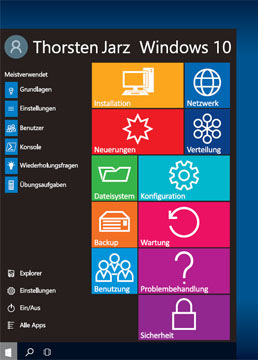
Windows 10/11 Updates
- KB5082200 Windows 10 22H2 Sicherheitspatch März 2026 (ESU) 2026-04-15 05:52:08
- KB5083769 Windows 11 25H2 / 24H2Sicherheitsupdate April 2026 2026-04-15 05:49:02
- KB5078885 Windows 10 22H2 Sicherheitspatch März 2026 (ESU) 2026-03-11 06:05:51
- KB5079473 Windows 11 25H2 / 24H2 Sicherheitsupdate März 2026 2026-03-11 06:04:02
- KB5077241 Windows 11 25H2 / 24H2 optionales Update Februar 2026 2026-02-25 05:23:50
- KB5075912 Windows 10 22H2 Sicherheitspatch Februar 2026 (ESU) 2026-02-11 06:21:33
- KB5077181 Windows 11 25H2 / 24H2 Sicherheitsupdate Februar 2026 2026-02-11 06:18:55